Are your birds hand-tame?
Most young birds are raised naturally by their parents. As a result, they are often not hand-tame. The aim is for the birds to grow up as naturally as possible and, above all, to be able to be birds.


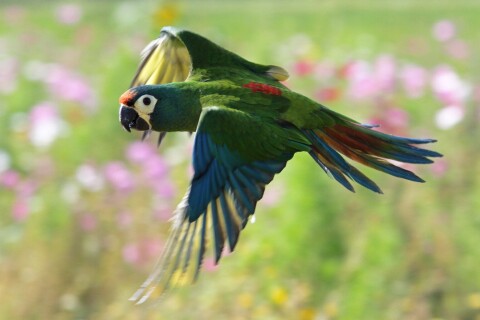
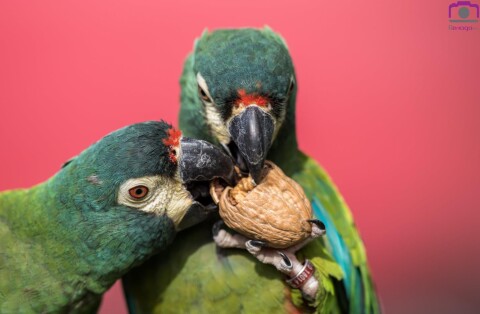
Ara Maracanas are predominantly green, with a bright red stripe on their forehead. Their head and neck are dark blue. They have a reddish-brown patch on their rump, which becomes beautifully visible during flight. Their eyes are black with an orange-brown rim. Their tail feathers are blue, green, red, and brown. At first glance, these birds may seem a bit dull, but in the air with the sunlight on them, they are truly stunning to see.
Natural habitat
Originally, Ara Maracanas live in central and southern Brazil, eastern Paraguay, and Argentina. Unfortunately, they are now very rarely seen. The wild populations are severely threatened, mainly due to the destruction of their habitat. In addition, local farmers consider the birds pests and hunt them (and set traps). They are also regularly stolen from their nests to be sold as tame house birds.
Breeding
Sexually mature: 4 to 5 years
Incubation period: 28 days
Breeding process: on average, Ara Maracanas lay 3 to 4 eggs
Nest box: with us, the birds can use an 18 mm multiplex nest box with dimensions of 30x30x70 cm (l x w x h) and an entrance hole of 80 mm all year round.
Feeding
The birds’ main diet consists of a mix of seeds, nuts, vegetables, sprouted seeds, and occasionally some fruit. In winter, they receive more pellets than seeds. Especially in spring and summer, they also enjoy eating from the trees and plants found in the area. The buds of the wild chestnut are particularly popular.
During the resting period between October and February, we actually only feed seeds, pellets, dried insects, and occasionally some sprouted seeds.
Our birds
At the end of 2019, we bought our first pair of Ara Maracanas, at that time still young birds trained to fly freely. Kiki and Starbucks were trained to fly loose in the middle of a large village. Great fun for the birds: every Wednesday they could collect nuts at the market, and on other days they would fly into the bakery for some fresh cookies. They also had plenty of awnings to choose from to make their nests in. If they got bored, there was always an antenna or windshield wiper of a car to dismantle. Lots of fun for the birds, but of course less fun for ‘the neighbors’. Fortunately, we live in a more rural area and can offer the birds more space. We do always have to keep an eye on them—they remain little rascals! If we let them out too early in the season, there’s a chance that not a single tree will bloom in spring since they eat all the buds. As far as we’re concerned, Ara Maracanas are real clowns, but super fun!
Housing
Our birds have access to a night shelter of 1x1x2 and an outdoor enclosure of 2x1x2 (lxwxh). Please note: our birds are trained to fly their daily rounds; otherwise, I would definitely recommend housing them in a larger space.
Fun fact!
Do you have a question about our birds, working method, or current selection? Here you will find the answers to some frequently asked questions. Can't find your question? Feel free to contact us.
Most young birds are raised naturally by their parents. As a result, they are often not hand-tame. The aim is for the birds to grow up as naturally as possible and, above all, to be able to be birds.
The birds offered come from tested stocks and have been screened for the known parrot diseases. The young birds are also sexed. Additional tests are possible upon consultation.
The current selection is listed on the website. For more information about availability, prices, or a specific bird, you can contact us directly at: 0641361182
Our birds grow up as they should: with space to fly, companions of their own kind around them, and parents who raise them themselves.
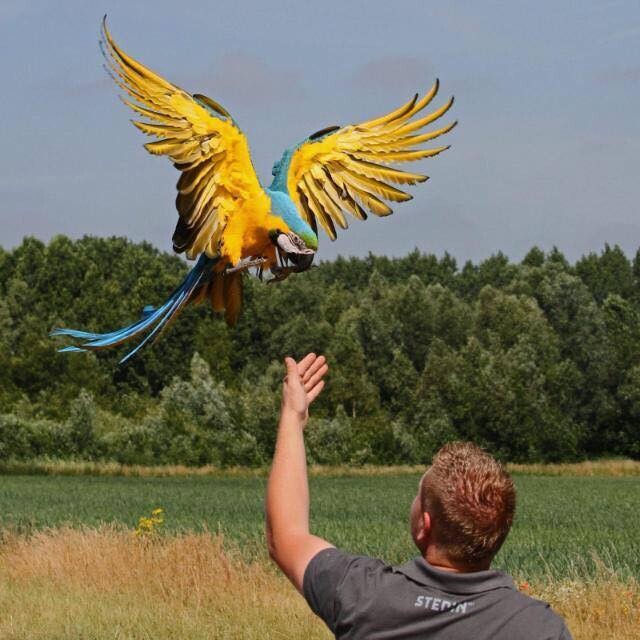
Outdoor flights with their own night shelter. Wings are meant to be used.
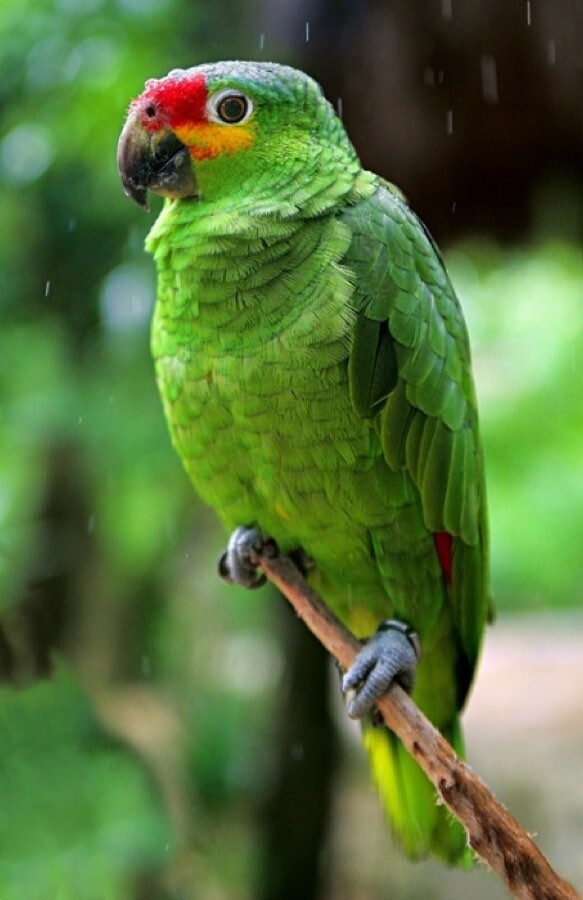
Our boys are raised by their own parents, not by hand.
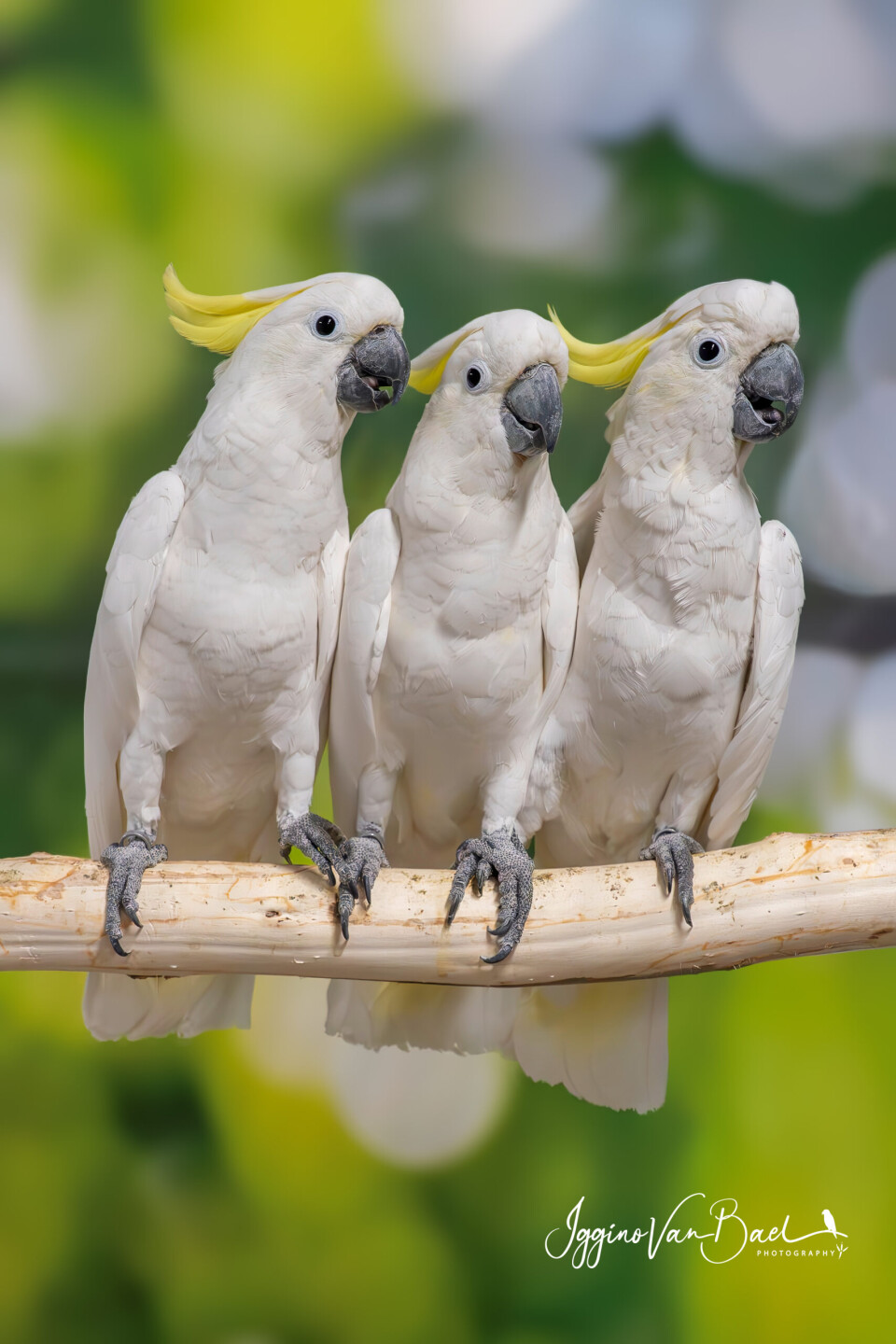
Each bird is with an equivalent partner or among its peers.
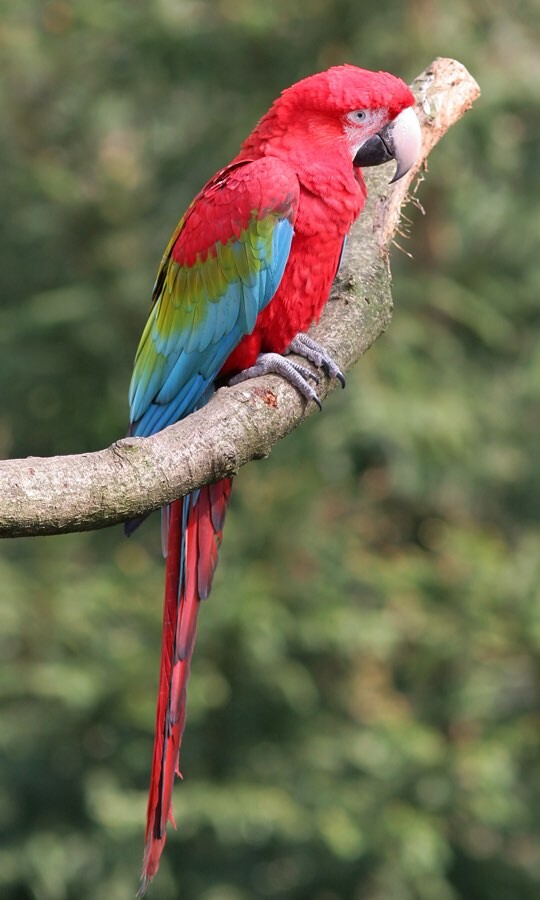
Feeding schedules, fresh food daily, and plenty of daylight.